


Digital transformation will claim 21 percent of the restaurant market by 2025, yet many restaurants still hesitate to embrace this change. In fact, we’re witnessing a dramatic shift in consumer behavior, with 39 percent of diners now preferring mobile apps or online ordering systems.
The consequences of ignoring this digital revolution are severe. Half of customers delete restaurant apps after just one poor delivery experience, while 81% expect brands to understand their preferences better. We can’t overlook these numbers – they tell us a clear story about where the industry is heading.
In this guide, we’ll explore why digital transformation is crucial for your restaurant’s survival, what solutions you need to implement, and how to create a practical strategy that ensures your business thrives in 2025 and beyond.
The State of Restaurant Industry in 2025
“Automated digital menus and self-service technology are set to take center stage in restaurants by 2025, offering customers greater convenience and personalization while streamlining operations for businesses.” — Tripleseat, Leading provider of event management software for restaurants
The restaurant industry stands at a pivotal moment, with foodservice sales projected to reach **[INR 126.57T](https://restaurant.org/research-and-media/research/research-reports/state-of-the-industry/)** in 2025. Furthermore, the industry workforce is expected to grow by 200,000 jobs, bringing total employment to 15.9 million.
Current digital adoption rates
Digital ordering has surged 300% faster than dine-in traffic since 2014, with online ordering now accounting for 27% of all transactions. Notably, 92% of top-performing restaurants offer mobile ordering options. The contactless payment market shows remarkable growth, with a projected CAGR of 15.93% between 2024 and 2032.
Predicted market changes
The food service industry’s market size is set to nearly double by 2030, reaching INR 151.88T, with an annual growth rate of 10.03%. Additionally, quick-service restaurants are projected to see the strongest growth at 4.0%, followed by full-service restaurants at 3.8%.
Consumer spending patterns show promising trends:
- Quick-service restaurants: INR 27313.95B
- Casual dining: INR 12977.71B
- Fast-casual dining: INR 6877.01B
Customer behavior trends
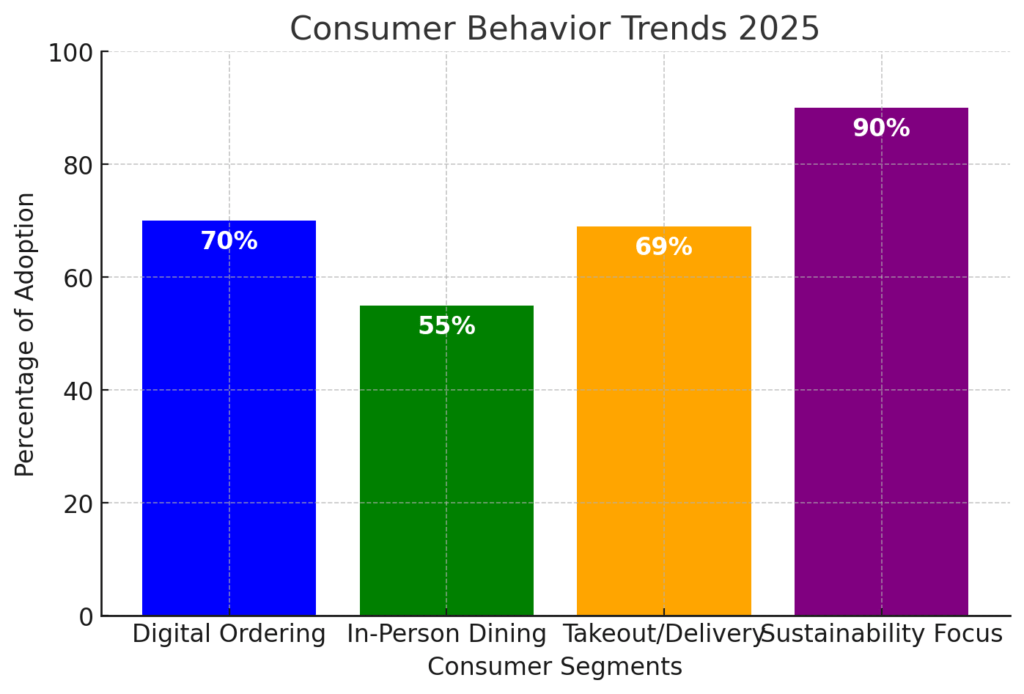
The shift in consumer preferences is unmistakable. Primarily, 55% of customers report their in-person dining frequency matches or exceeds pre-pandemic levels. Consequently, 69% maintain or have increased their takeout and delivery habits.
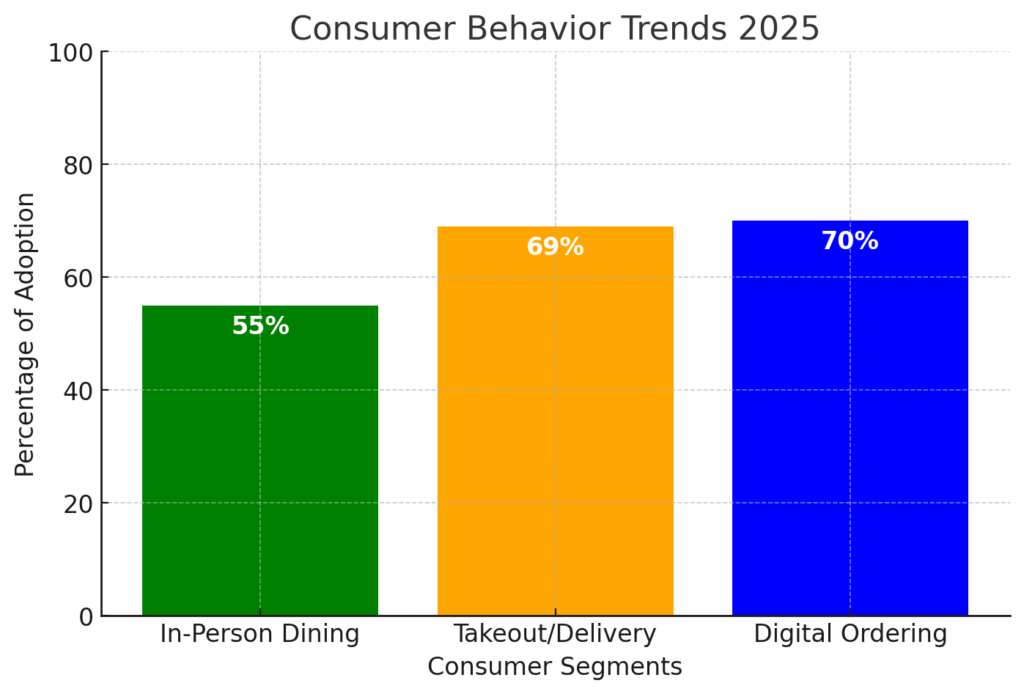
A significant 70% of consumers ordered delivery or takeout in the past month, with 66% indicating increased frequency compared to pre-pandemic times. The younger generations are driving this change – 59% of Millennial restaurant orders are for takeout or delivery, while 69% of Gen Z consumers show the strongest preference for delivery services.
The industry is experiencing a notable shift toward sustainability, with over 90% of consumers seeking sustainable choices. This trend is reflected in restaurants’ operations, as 75% have adopted initiatives like waste tracking and eco-friendly packaging.
Why Traditional Restaurant Models Are Dying
Traditional restaurants face unprecedented challenges as operational costs soar and customer preferences evolve rapidly. A detailed analysis reveals why many establishments struggle to stay afloat without embracing digital solutions.
Rising operational costs
Restaurant operations now demand significantly higher investments, with initial setup costs ranging between INR 21095112.70 and INR 37971202.86. Moreover, the industry faces mounting pressure from multiple directions:
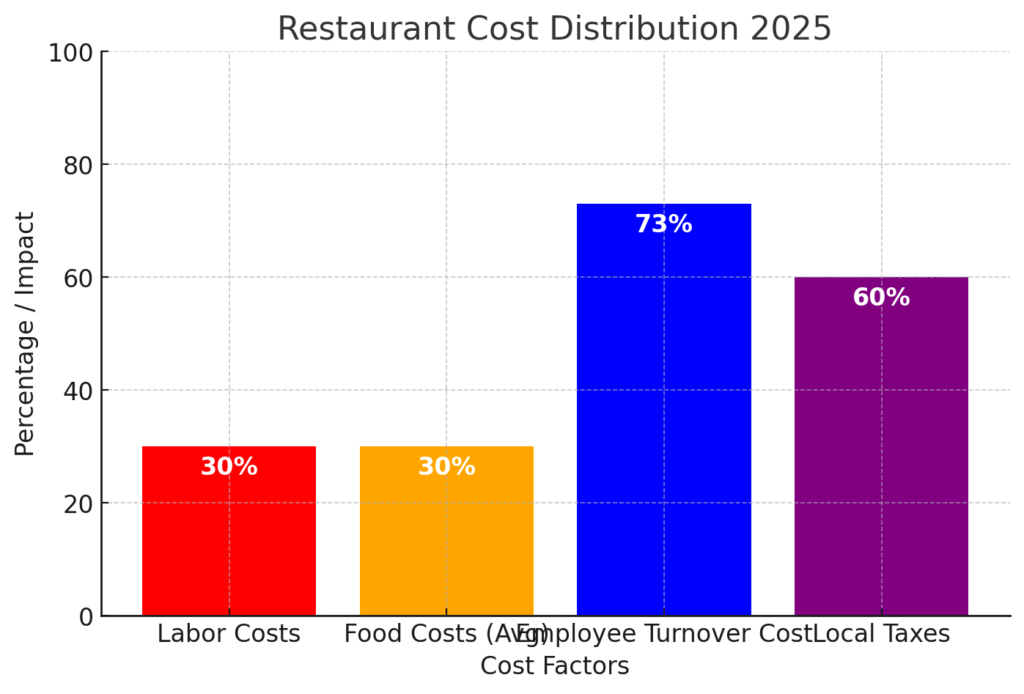
Particularly concerning is the hidden cost structure that many owners overlook. Local taxes can reach up to 60% on essential services such as garbage disposal and recycling. These expenses, combined with rising utility bills and maintenance costs, create a complex web of financial challenges that traditional models struggle to address.
Changing customer expectations
The modern dining landscape has undergone a fundamental shift. Important to realize, customers now demand more than just quality food and service – they seek a tech-savvy, personalized experience.
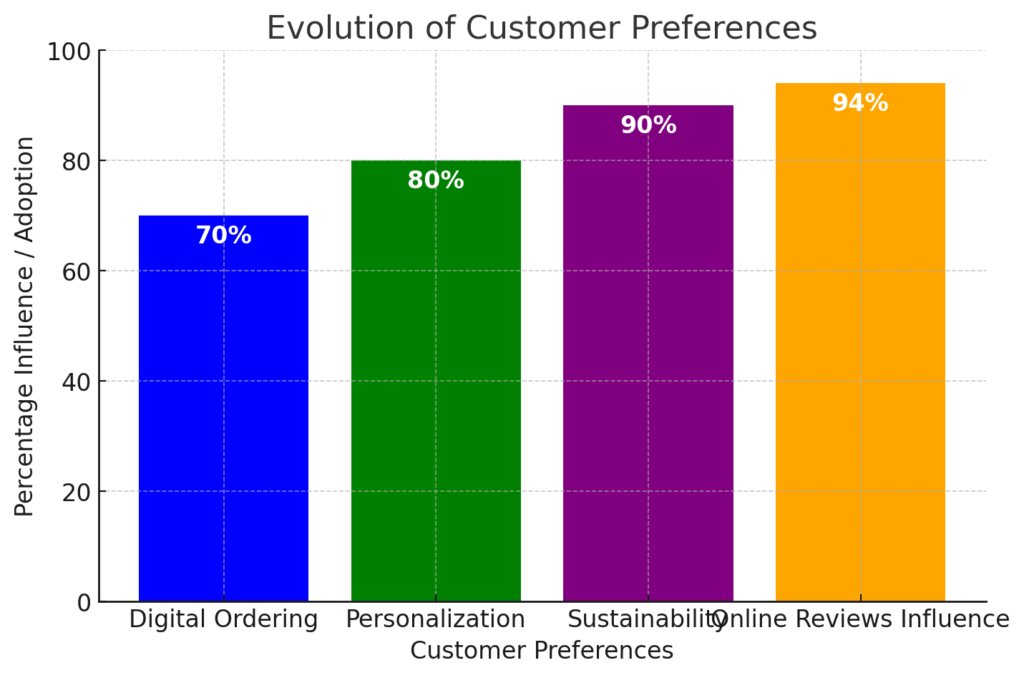
[Graph: Evolution of Customer Preferences]
- Digital ordering preference
- Personalization demands
- Sustainability focus
As shown above, the transformation in consumer behavior is striking:
- 94% of diners check online reviews before visiting
- A single-star increase in online ratings leads to 5-9% revenue growth
- Customers increasingly prefer contactless services and mobile ordering options
The sustainability factor has emerged as a critical consideration, with customers becoming more conscious about environmental practices. Essentially, they expect restaurants to demonstrate commitment to eco-friendly packaging and sustainable sourcing.
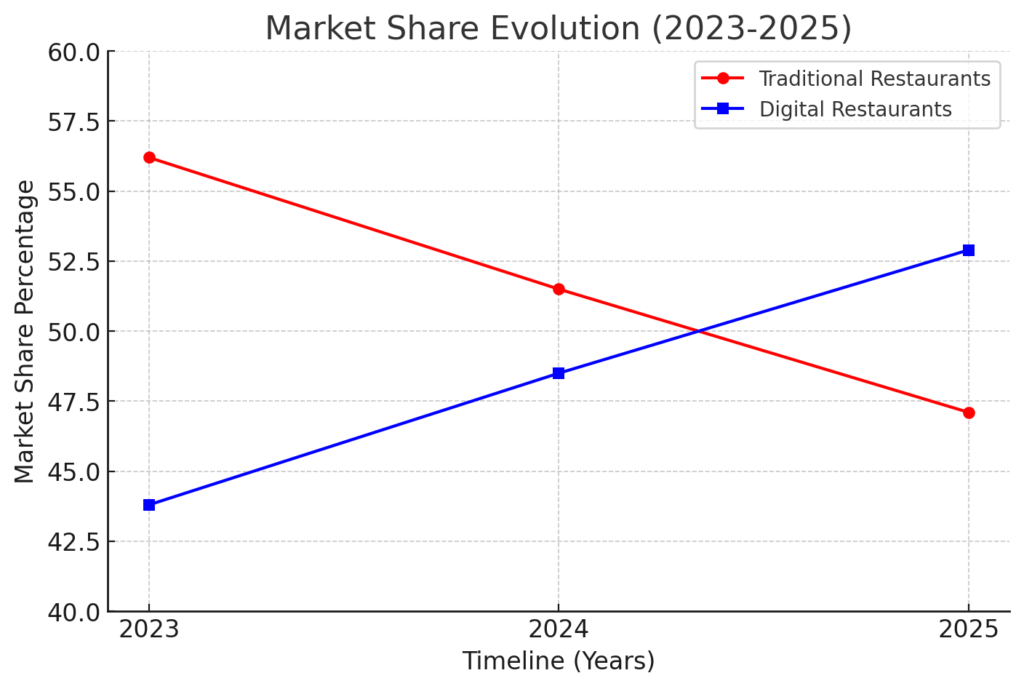
The traditional restaurant model’s inability to adapt to these changes results in significant market share decline. Without digital transformation solutions, establishments face declining customer satisfaction and increasing operational inefficiencies.
Critical Digital Transformation Solutions
“83% of operators believe technology investments provide a competitive edge, with 69% noting that automation improves productivity.” — Dr. Chad Moutray, VP of Research and Knowledge at the National Restaurant Association
First of all, successful restaurants in 2025 require four fundamental digital solutions to maintain competitiveness and operational efficiency.
Online ordering systems
Modern online ordering platforms now process INR 7211.15 billion in restaurant delivery revenue. Square Online and similar platforms offer comprehensive features including:
These systems synchronize orders across multiple channels, accordingly reducing errors and streamlining operations. Through integrated platforms, restaurants can manage delivery, takeaway, and dine-in orders from a single dashboard.
Kitchen automation
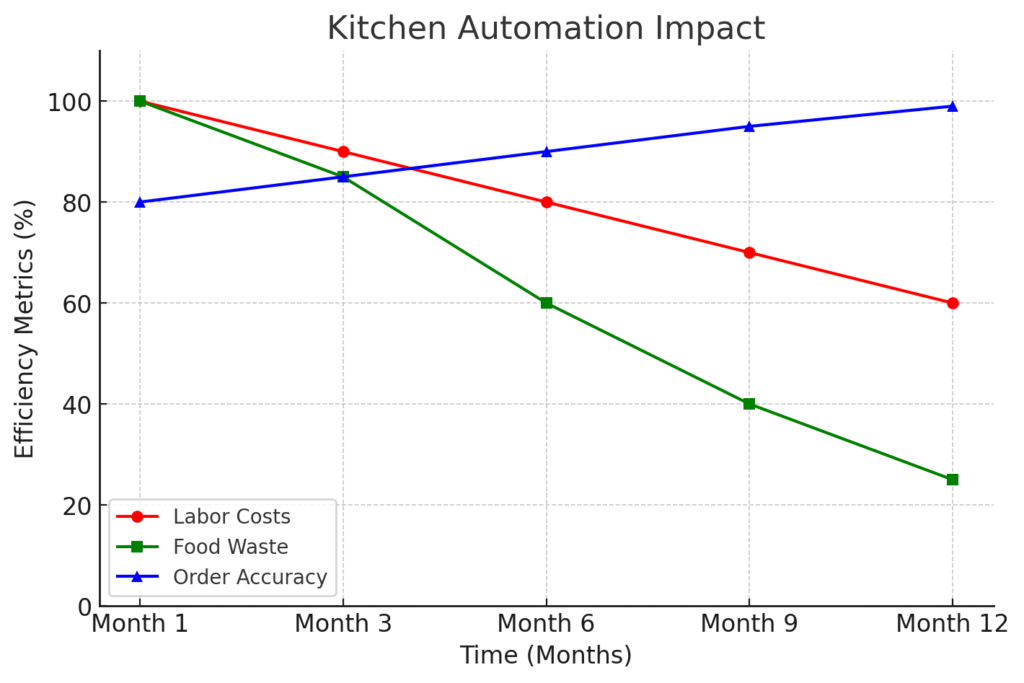
Automated kitchen solutions have emerged as game-changers for operational efficiency. Therefore, restaurants implementing automation report:
- 25-75% reduction in food waste
- Fully automated supply chain management
- Zero food allergy incidents through precise ingredient tracking
Customer data analytics
Similarly, data analytics provides unprecedented insights into restaurant operations. Modern analytics platforms track:
Restaurant analytics platforms now unify data from multiple sources, enabling owners to make informed decisions about menu optimization, staffing, and inventory management. These systems process information from point-of-sale, staff scheduling, and inventory systems to generate actionable insights.
Payment technologies
Payment solutions have undergone substantial transformation, with 70% of merchants planning to incorporate new payment technologies within the next 12 months. Modern payment platforms offer:
QR code payments have gained significant traction, allowing customers to view menus, order, and pay directly from their phones. These solutions enhance operational efficiency by reducing wait times and improving table turnover rates.
Financial Impact of Delayed Digital Adoption
Numbers paint a stark picture of restaurants lagging in digital adoption. Initially, traditional restaurants face a significant revenue gap, as 41% of average restaurant revenue now flows through digital channels.
Revenue loss statistics
The financial impact manifests through several key indicators:
- Traditional restaurants experience 13.2% lower growth rate
- Market valuation drops by 47.1% for non-digitized establishments
- Digital ordering penetration has jumped from 8% to 12% in just four years
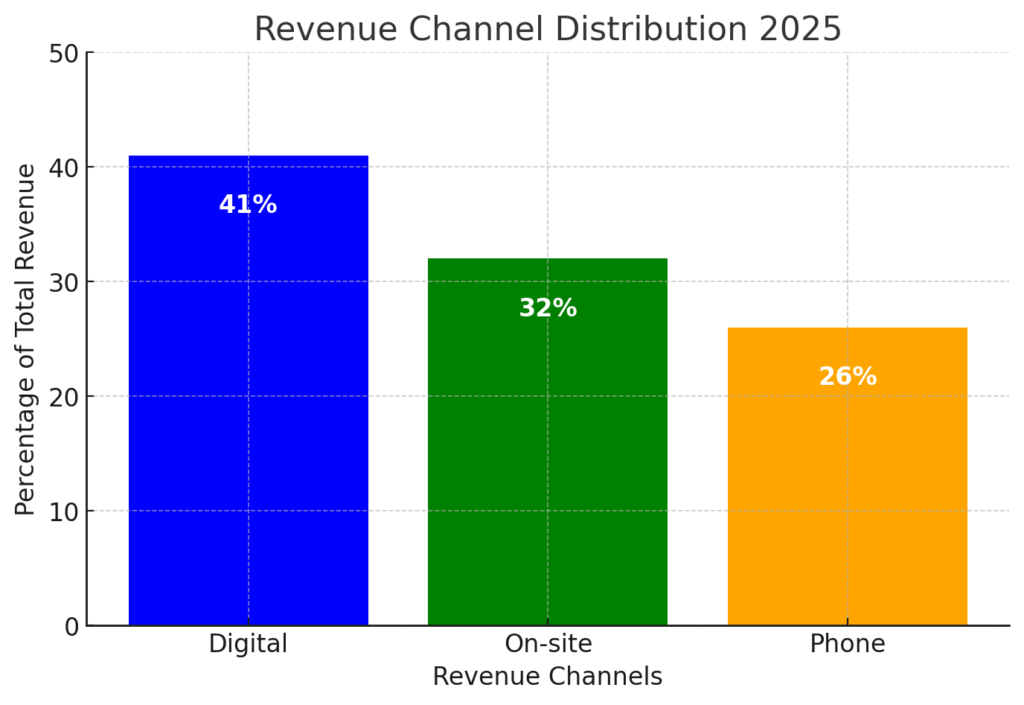
Subsequently, the time-lagged effect of digital transformation becomes evident after approximately one year, showing enhanced profitability and reduced operational costs. Presently, restaurants without digital infrastructure report 49% more time spent on data gathering rather than analysis.
Market share decline
The market share trajectory shows a clear divide between digitally-enabled and traditional establishments. Primarily, unorganized segments are projected to decline from 56.2% to 47.1% market share. This shift correlates directly with the rise of digital platforms and changing consumer preferences.
The financial implications extend beyond immediate revenue:
Traditional restaurants face mounting challenges in securing funding for necessary technological investments. This creates a cycle where limited access to financial resources leads to outdated practices, ultimately resulting in decreased market competitiveness.
The ghost kitchen market, driven by digital transformation, underscores this shift. From a valuation of 43.1 billion USD, it’s projected to reach 71.4 billion USD by 2027, highlighting how digital-first operations capture increasing market share.
Data analytics reveals that restaurants embracing digital transformation show improved RevPASH (Revenue Per Available Seat Hour) and decreased labor costs. These establishments also report higher profit margins from online sales, creating a widening gap between digital adopters and traditional operators.
Essential Steps for Digital Restaurant Success
Creating a successful digital transformation roadmap requires careful planning and strategic execution. A thorough assessment of current operations and pain points serves as the foundation for digital success.
Digital transformation strategy creation
The path to digital success begins with a comprehensive strategy that aligns with business objectives. Research shows that 76% of operators believe technology provides a competitive edge.
A successful strategy encompasses:
- Data-driven decision making for menu planning and operations
- Clear implementation goals and measurable KPIs
- Robust security measures for digital systems
- Staff training and change management protocols
Technology assessment
Prior to implementation, restaurants must evaluate their current technological landscape. Primarily, this assessment should focus on identifying legacy systems, data silos, and operational inefficiencies.
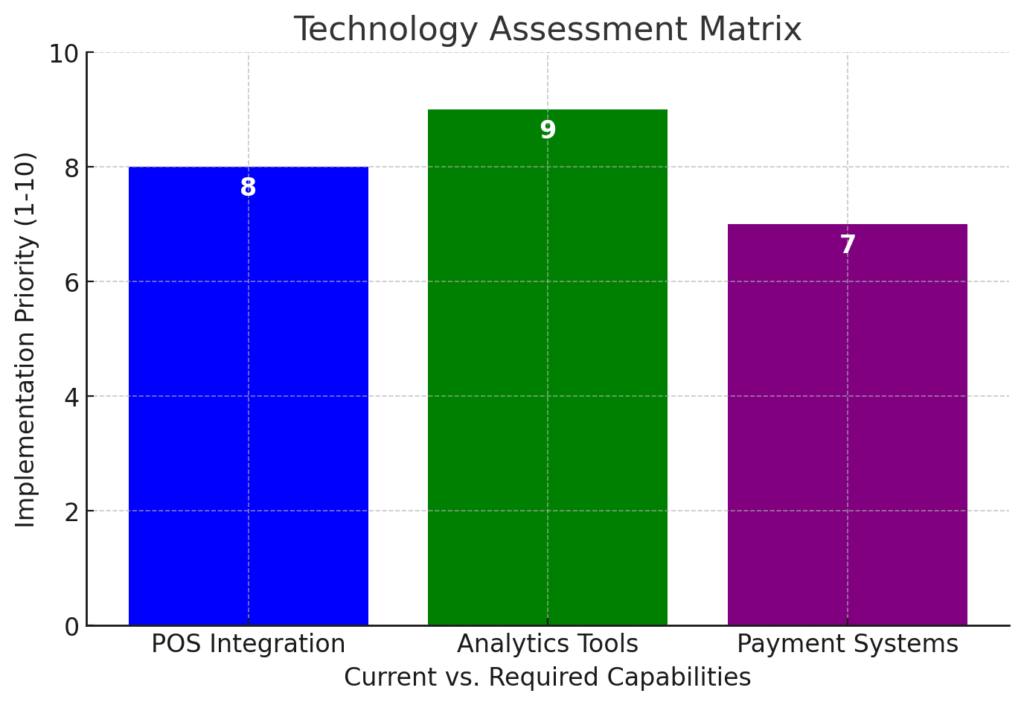
During the assessment phase, restaurants should examine:
- Integration capabilities with existing systems
- Scalability potential for future growth
- Vendor support and maintenance requirements
Implementation timeline
The implementation process demands a structured approach with clear milestones. Specifically, successful digital transformations follow a phased implementation plan that includes:
Phase 1 (1-3 months):
- Comprehensive digital audit
- Staff training initiation
- Core system setup
Phase 2 (3-6 months):
- Process automation integration
- Data collection framework establishment
- Performance monitoring systems
Phase 3 (6-12 months):
- Advanced analytics implementation
- Full system integration
- ROI measurement and optimization
Evidently, regular performance monitoring and optimization remain crucial throughout the implementation process. Altogether, 70% of merchants plan to incorporate new payment technologies within the next year, highlighting the urgency of maintaining an agile implementation approach.
Forthwith, restaurants must ensure robust data security measures and maintain strong vendor partnerships throughout the transformation journey. Following successful implementation, establishments should focus on continuous improvement and adaptation to emerging technologies.
Conclusion
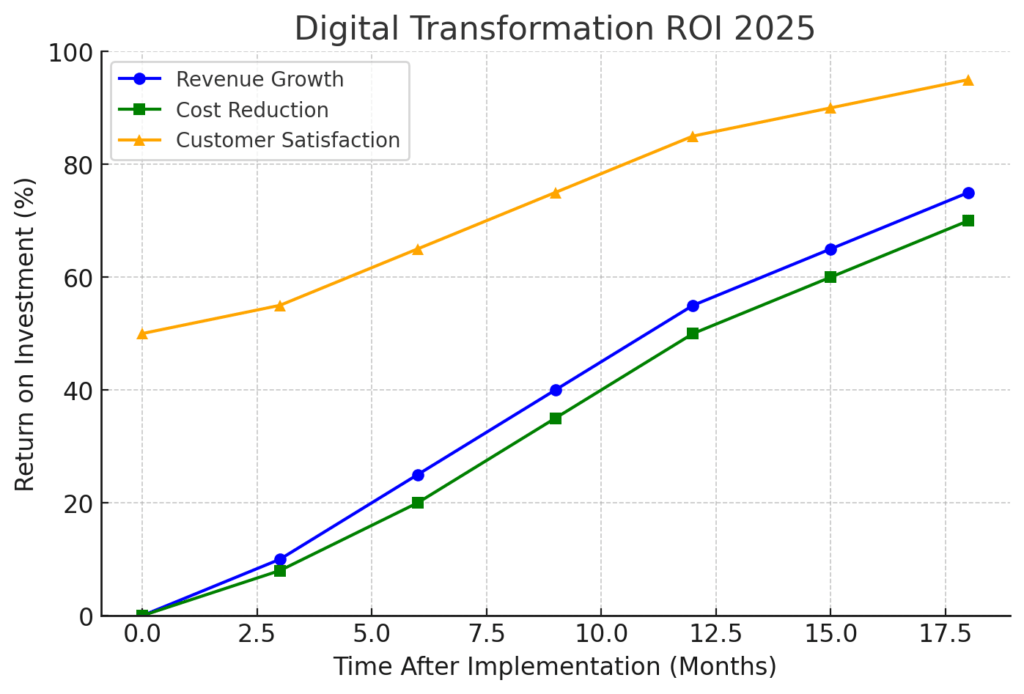
Digital transformation stands as the defining factor between thriving restaurants and those at risk of closure by 2025. Market data clearly shows restaurants embracing digital solutions capture 41% more revenue through digital channels, while traditional establishments face declining market share and mounting operational costs.
Success requires immediate action across four key areas:
- Online ordering systems integration
- Kitchen automation deployment
- Customer data analytics implementation
- Modern payment technology adoption
Traditional restaurants risk losing 47.1% of their market valuation without these essential digital upgrades. Smart operators recognize this reality and start their transformation journey now, rather than playing catch-up later.
Restaurant owners who act quickly gain significant advantages – reduced operational costs, enhanced customer satisfaction, and stronger market positioning. Those who delay face an increasingly steep climb as digital-first competitors capture larger market shares.
Time proves the most critical factor. Each month of delayed digital adoption translates to lost revenue and market opportunities. Start your restaurant’s digital transformation today – your business survival in 2025 depends on it.
FAQs
Q1. How will digital transformation impact restaurants by 2025?
By 2025, digital transformation is expected to claim 21% of the restaurant market. Restaurants embracing digital solutions are projected to capture 41% more revenue through digital channels, while those failing to adapt risk significant market share loss and declining profitability.
Q2. What are the key digital solutions restaurants need to implement?
Essential digital solutions for restaurants include online ordering systems, kitchen automation, customer data analytics, and modern payment technologies. These solutions help streamline operations, reduce costs, and improve customer satisfaction.
Q3. Why are traditional restaurant models becoming obsolete?
Traditional restaurant models are struggling due to rising operational costs and changing customer expectations. Modern diners now demand tech-savvy, personalized experiences, with 94% checking online reviews before visiting and an increasing preference for digital ordering and sustainability practices.
Q4. What is the financial impact of delaying digital adoption for restaurants?
Restaurants that delay digital adoption face significant financial consequences. They experience 13.2% lower growth rates, potential market valuation drops of up to 47.1%, and miss out on the 41% of average restaurant revenue that now flows through digital channels.
Q5. How can restaurants create a successful digital transformation strategy?
To create a successful digital transformation strategy, restaurants should start with a comprehensive assessment of their current technology, set clear implementation goals with measurable KPIs, ensure robust data security, and follow a phased implementation plan. It’s crucial to align the strategy with business objectives and include staff training and change management protocols.
Can you be more specific about the content of your article? After reading it, I still have some doubts. Hope you can help me. https://accounts.binance.info/register-person?ref=IXBIAFVY
I don’t think the title of your article matches the content lol. Just kidding, mainly because I had some doubts after reading the article.
Your article helped me a lot, is there any more related content? Thanks!
Your point of view caught my eye and was very interesting. Thanks. I have a question for you.
Your article helped me a lot, is there any more related content? Thanks!
Can you be more specific about the content of your article? After reading it, I still have some doubts. Hope you can help me.
Your article helped me a lot, is there any more related content? Thanks! https://accounts.binance.com/de-CH/register-person?ref=W0BCQMF1
Your point of view caught my eye and was very interesting. Thanks. I have a question for you.
Thank you for your sharing. I am worried that I lack creative ideas. It is your article that makes me full of hope. Thank you. But, I have a question, can you help me?
Your point of view caught my eye and was very interesting. Thanks. I have a question for you. https://accounts.binance.info/si-LK/register?ref=LBF8F65G
Your point of view caught my eye and was very interesting. Thanks. I have a question for you. https://www.binance.info/el/register?ref=DB40ITMB
Thanks for sharing. I read many of your blog posts, cool, your blog is very good. https://accounts.binance.info/register-person?ref=IXBIAFVY